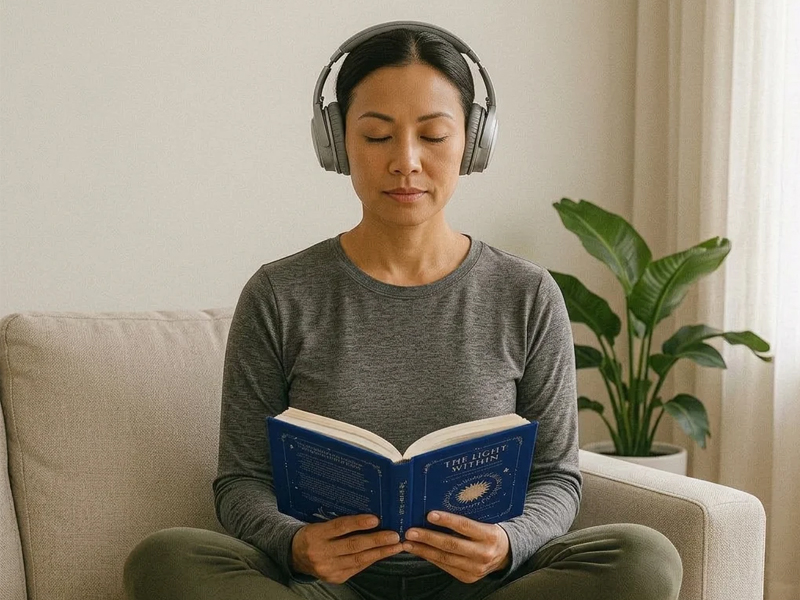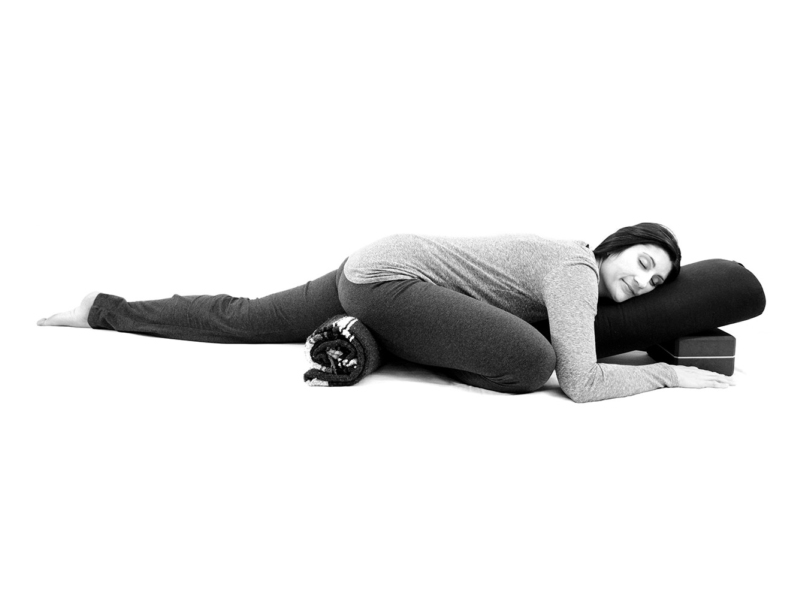

Holiday travel asks a lot of the body. Hours in the car, train or on a plane keep the hips bent and the back in one position, and by the time you arrive, many of us feel stiff, sore or even a little frazzled. Add the stress of busy airports, traffic and full family schedules, and it’s no wonder the low back and hips start to hold tension.
I’m Cyndi Roberts, a certified yoga therapist (C-IAYT), and I have lived with low back pain since 2001. I still notice flare-ups of sciatic pain on days when I sit for too long. This gentle, restorative practice is what I turn to when I arrive. It’s inspired by poses in my book, Yoga for Low Back and Hip Health, and it’s designed to ease hip and low back tension from holiday travel.
You don’t need to be flexible or experienced to practice it. Most of the poses are done lying down with props, so the body can rest while it stretches, soothing a hurried nervous system.
In this post: Before you begin · The routine · Short on time? · Why travel leaves you stiff · FAQ
Before you begin
What you’ll need:
- A bolster, folded blankets or towels. A firm, rectangular bolster gives the body a steady place to rest, but folded blankets, towels or firm bed or couch pillows also work.
- Two or three blankets. One goes under the head, and the others can stack on the bolster for more height or cover you to keep you warm.
- Two yoga blocks. They lift the bolster for Supported Inversion. Sturdy hardcover books can stand in for blocks when you’re away from home. You can also drape the legs over a chair or couch.
- A mat or soft padding on the floor.
Listen to your body. A gentle stretch is welcome, and pain is not. Come out of any pose if you feel tingling, numbness, burning or sharp, electric pain in the back or down the leg. If those symptoms run the length of the leg, or back pain doesn’t ease with rest, please see your doctor, because they can be signs of a disc issue.
After a long flight or drive, watch for swelling, pain or warmth in one calf. These can be signs of a blood clot, so call your doctor right away instead of stretching it out. If you have a heart condition, glaucoma or high blood pressure, or you are pregnant, check with your doctor before trying the inversion at the end of this routine.
A gentle yoga routine for a stiff back after travel
Move slowly between poses and give yourself a few breaths to settle into each one. If a pose doesn’t feel right today, skip it and go on to the next.
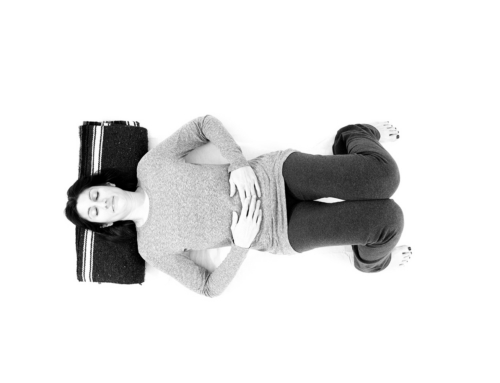
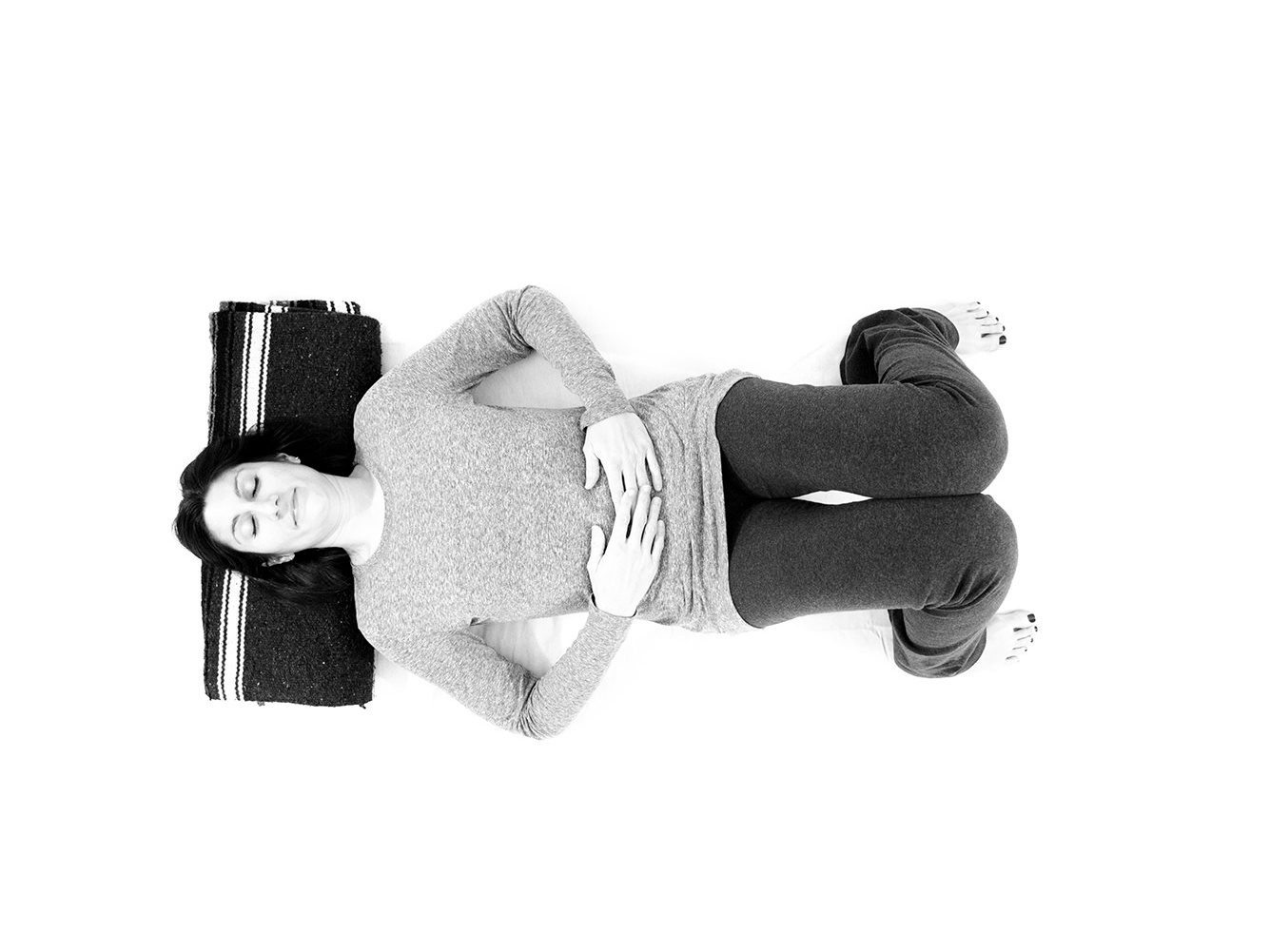
1. Reclined Leg Rest (5 to 10 minutes)
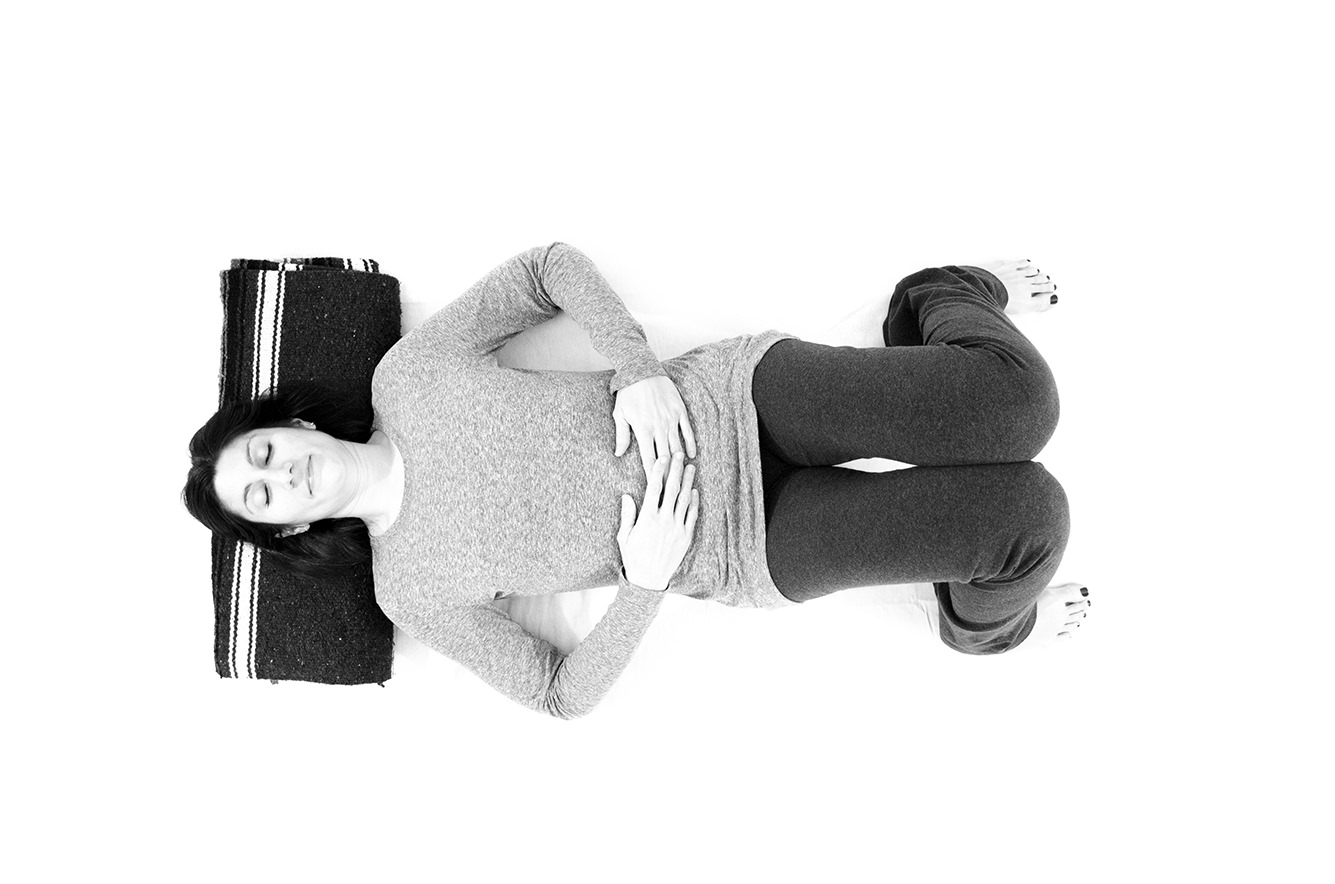
This posture invites stillness after the stress of travel. With the feet wide and the knees resting against each other, the muscles of the belly and the deep hip flexors can finally let go. As they soften, the breath has room to deepen, and the whole body can begin to rest.
- Lie on the back with a folded blanket under the head.
- Hug both knees to the chest for five slow breaths.
- Place the feet on the floor a little wider than the hips and let the knees rest together.
- Rest the hands on the belly and breathe slowly, imagining the thighbones settling into the hips.
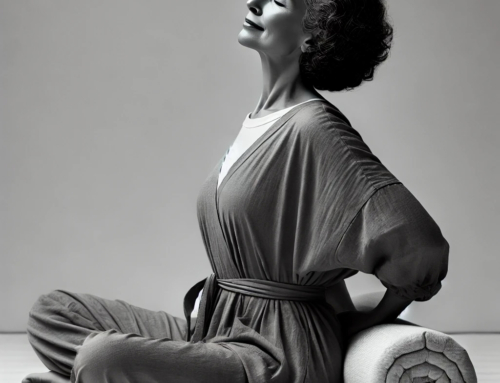
2. Supported Bridge With Bent Legs (3 to 5 minutes)
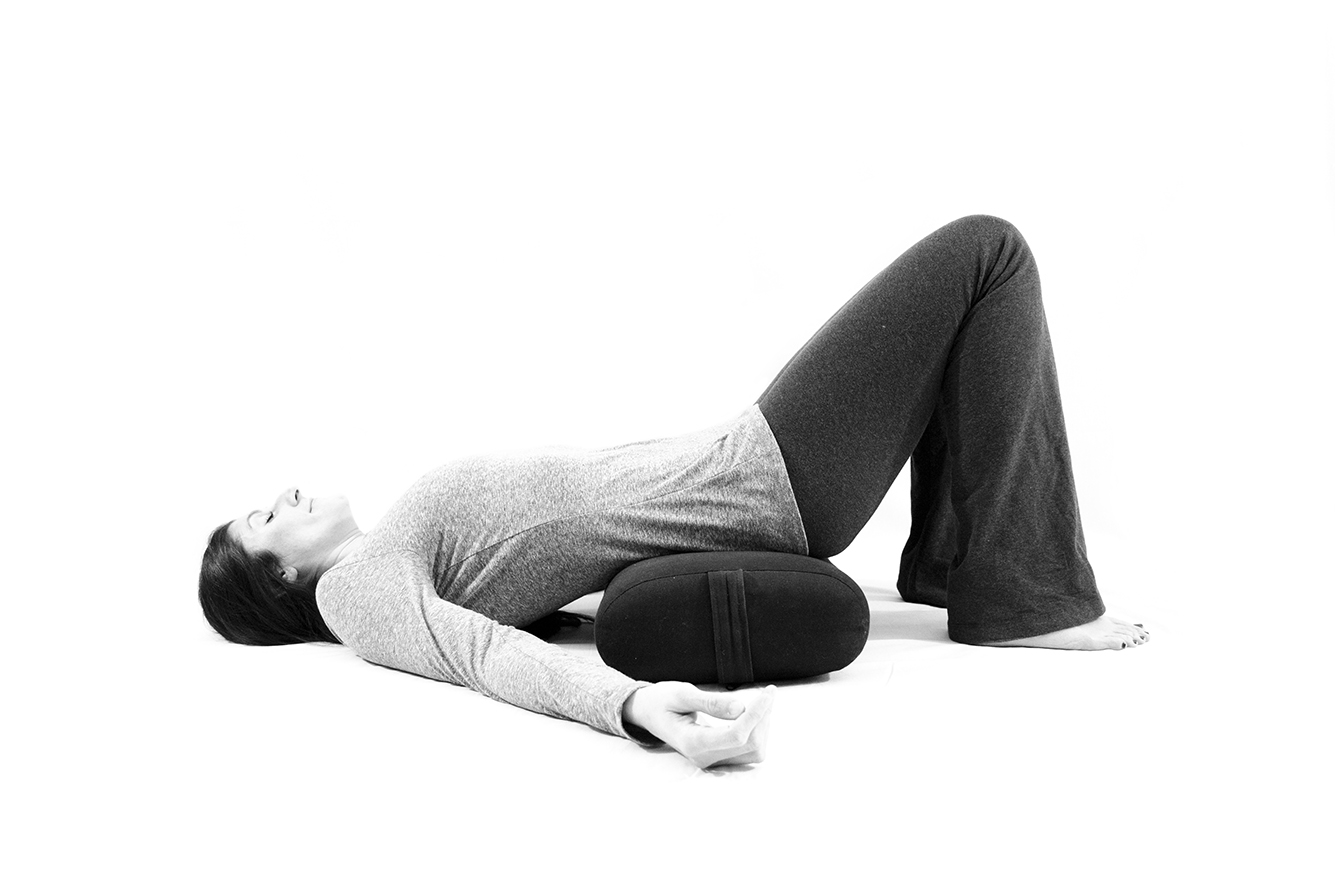
A bolster under the low back offers a gentle counterstretch to the rounded shape the spine holds in a car or airplane seat. With the chest open and the feet grounded, the low back can soften into the support and let go of the holding it carried through the trip.
- Lie on the back with the knees bent and the feet hip width apart, with nothing under the head.
- Press into the feet, lift the hips and slide a folded blanket under the low back and sacrum. For more stretch, use a bolster instead.
- Lower the hips onto the support.
- Rest the arms by the sides or open them like wings, and breathe into the belly, ribs and chest.
- To come out, lift the hips, slide the folded blanket or bolster away and lower down slowly.
3. Reclined Knee Hug (10 slow breaths)
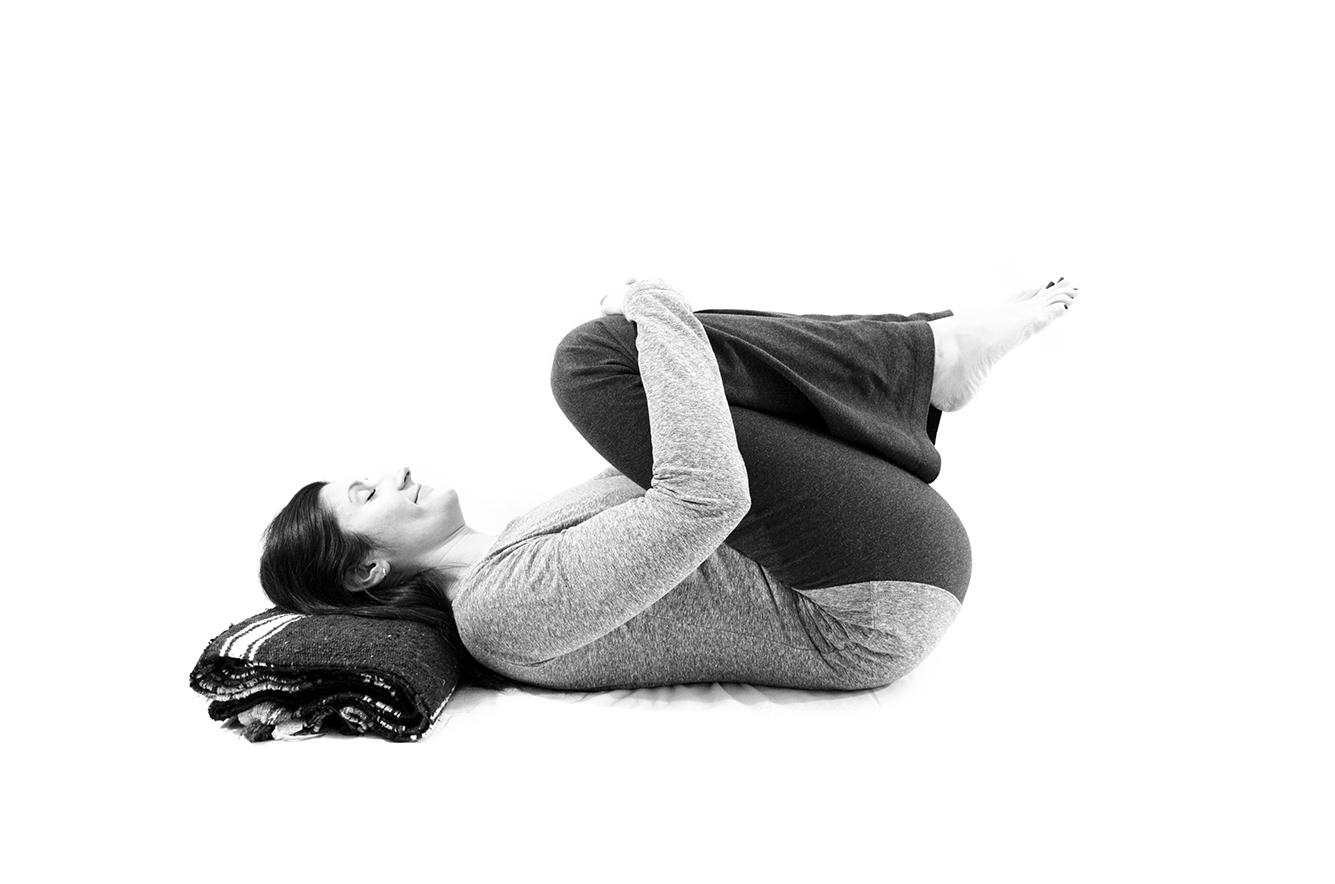
Reclined Knee Hug lengthens the low back, opening space between the vertebrae and releasing compression. It also gently stretches the erector spinae, the long muscles that run along either side of the spine. Hugging the knees feels a little like giving yourself a hug, which can help the body feel safe and settled.
- Add a folded blanket under the head.
- Take a breath and hug both knees toward the chest to lengthen the spine. Let the low back press gently into the floor.
- Soften the shoulders and face.
- If you would like some movement, place a hand on each knee and slowly circle them in both directions.
4. Cat/Cow Tilts (5 to 8 rounds)
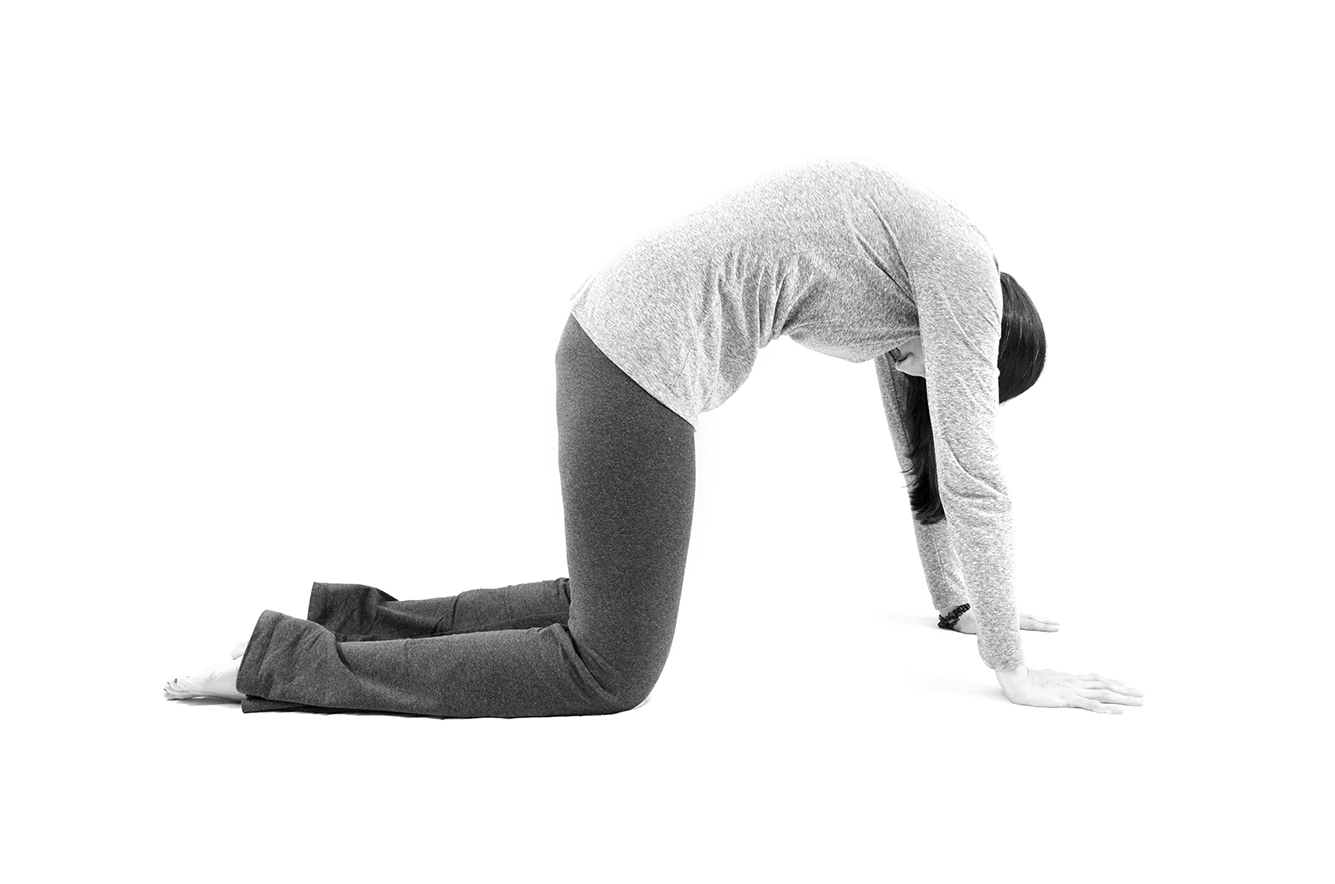
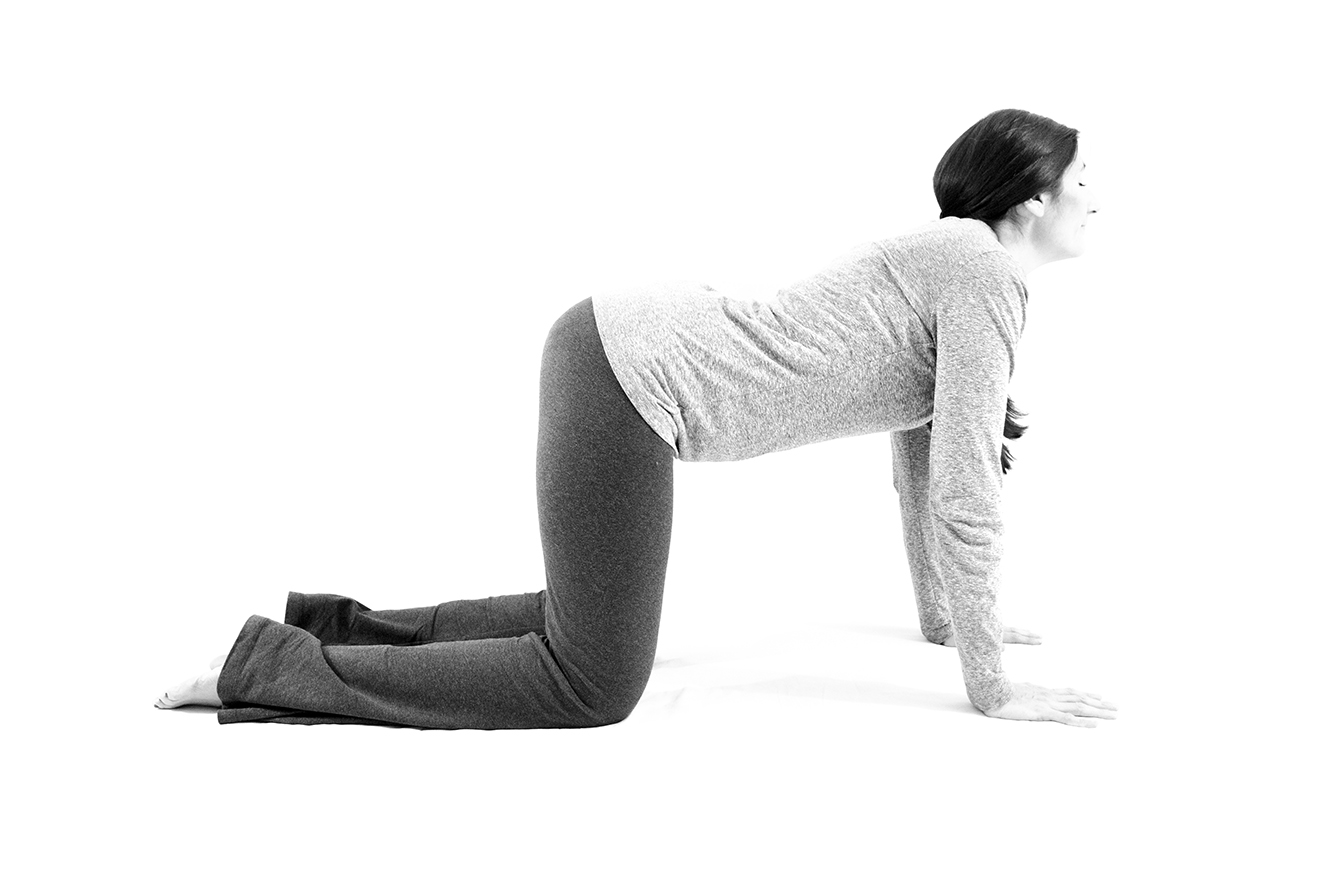
After hours in one position, the spine welcomes gentle movement. Cat/Cow moves the whole spine between rounding and arching in rhythm with the breath. The steady, repeating pace can calm the nervous system and gently increase mobility in the spine.
- Come onto hands and knees with wrists under shoulders and knees under hips.
- As you inhale, let the belly soften to the earth and draw the chest, the heart space, forward with a slight upward gaze. Use caution with the neck if you have any restrictions.
- As you exhale, round the upper back and let the head relax down, breathing into the back of the heart space and between the shoulders. Move slowly and let the breath set the pace.
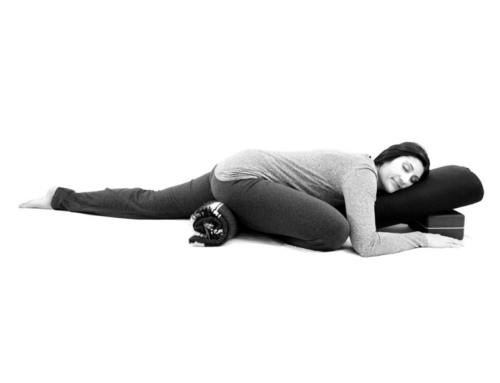
5. Supported Child’s Pose (6 minutes total)
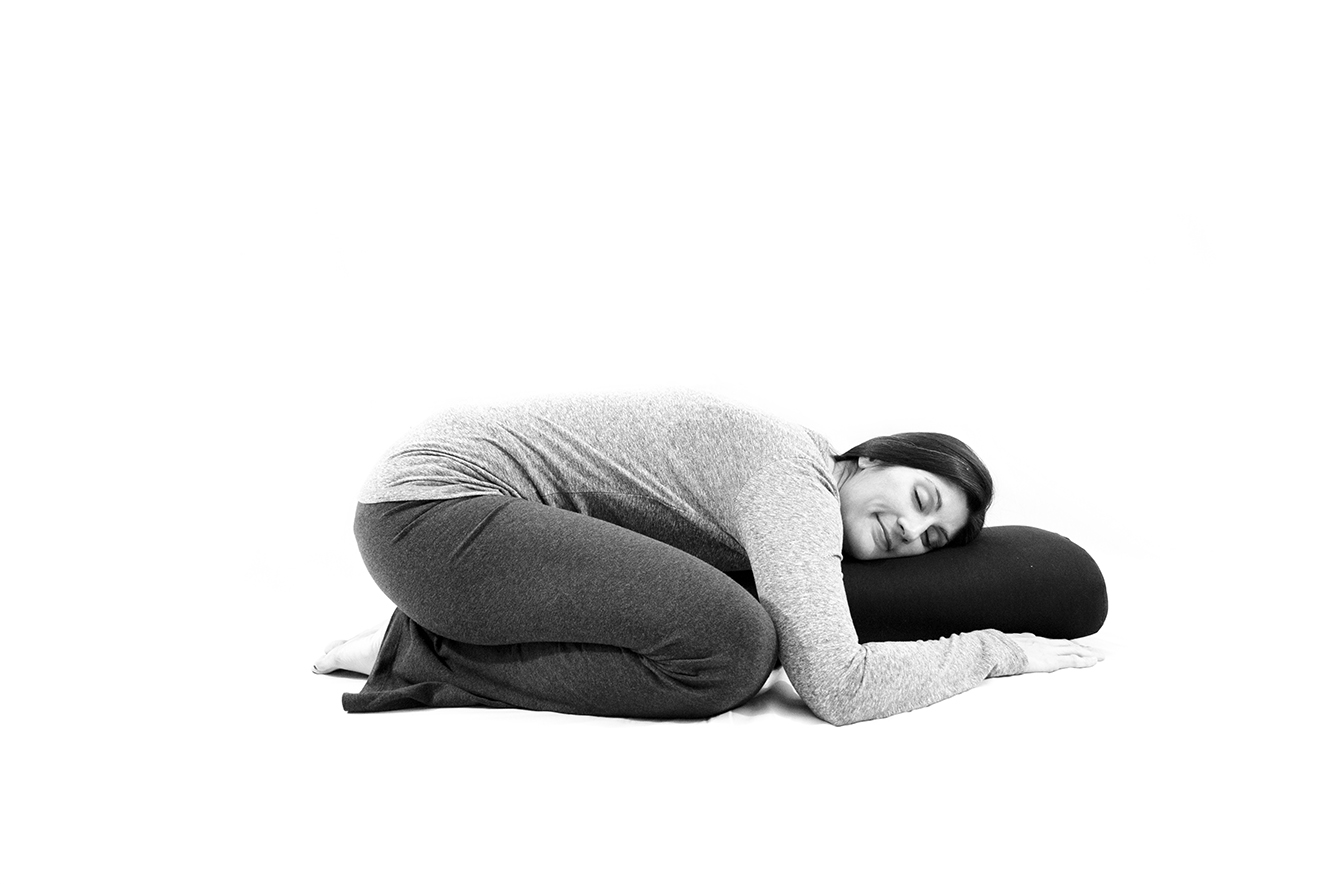
Supported Child’s Pose lets the front of the body rest fully on the bolster. As the hips sink toward the heels, the back of the body gently lengthens and the breath can expand into the back of the ribs. Being held by the props from below can help a tired, overstimulated nervous system settle.
- From hands and knees, place the folded blanket or bolster lengthwise in front of you.
- Bring the big toes together, open the knees to the sides of the bolster and sit back toward the heels.
- Fold forward and rest the chest and belly on the bolster. Add folded blankets on top if you need more height.
- Turn the head to one side for 3 minutes, then to the other side for 3 minutes.
6. Modified Downward Facing Dog (as long as you like)
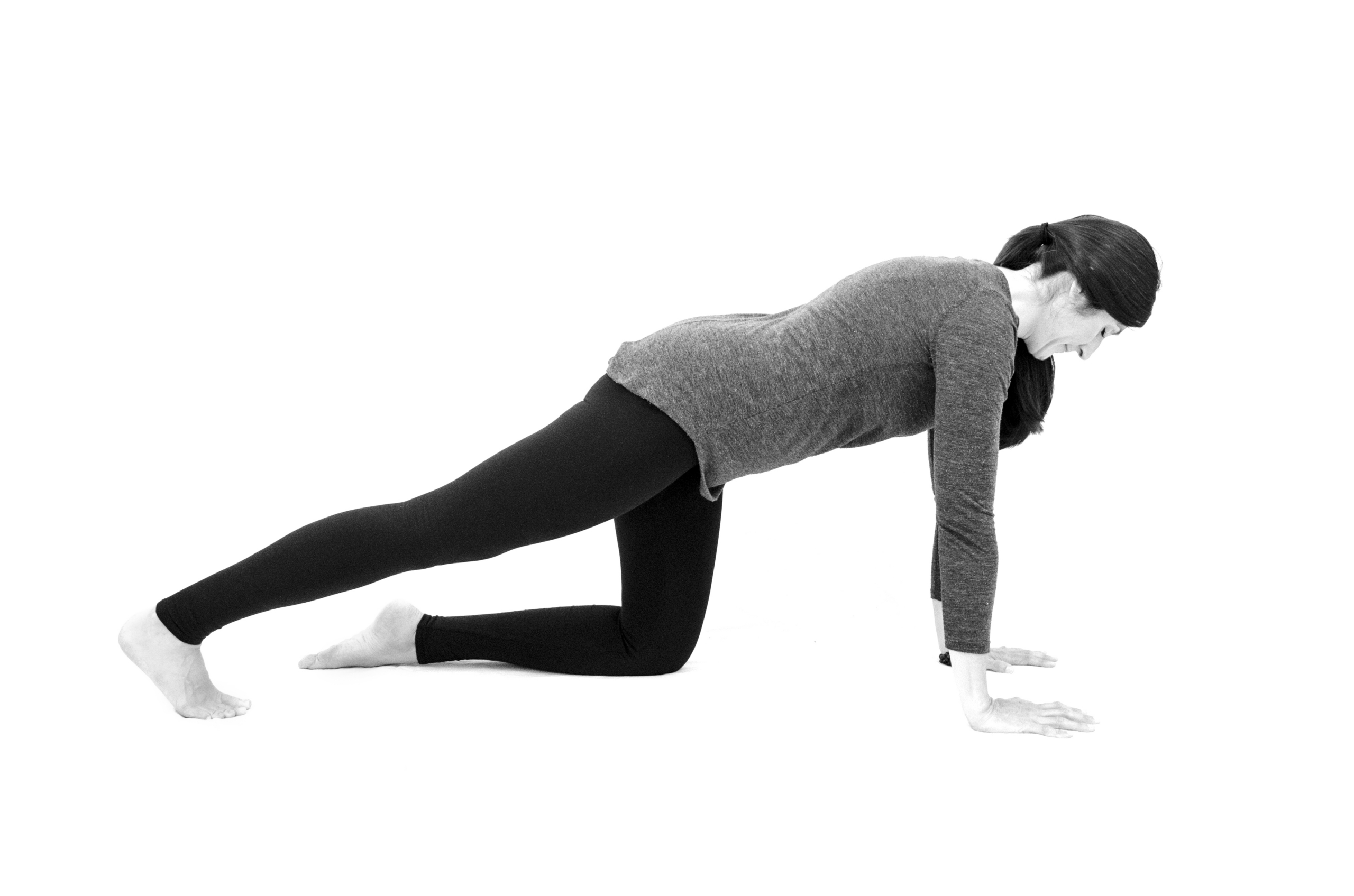
Sitting with the knees bent for hours can leave the calves and hamstrings feeling tight. This modified version stretches the back of one leg at a time while the hands and the other knee stay on the floor, which makes it gentler than the full pose. It also gently stretches the front of the hip, and moving the legs helps get circulation flowing after a long sit.
- From hands and knees, stretch one leg back with the toes tucked under and press gently through the heel. Switch legs and keep alternating until the backs of the legs feel less tension.
- Time your movement with the breath, stretching the leg back on inhale, then resting the knee down on exhale.
7. Supported Belly Down Twist With Extended Legs (5 to 6 minutes each side)
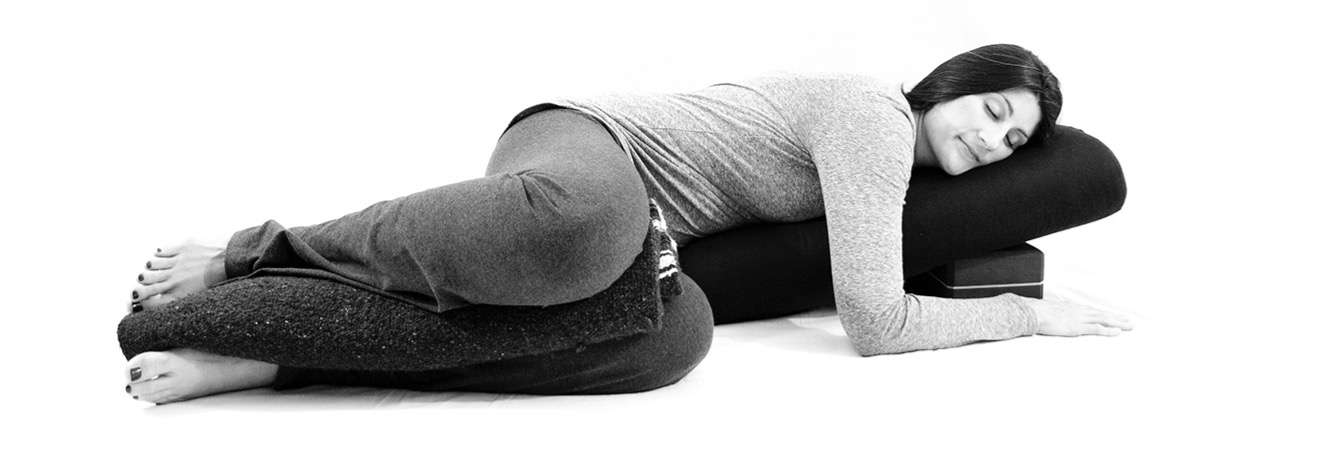
Sitting in a car or plane keeps the spine facing forward for hours with little chance to turn. This gentle twist brings rotation back to the spine. Most of that turning happens in the mid and upper back, because the joints of the low back are built for only a small amount of rotation. With the chest resting on the bolster, the muscles along the sides of the waist and between the ribs can lengthen, allowing tight breathing muscles to soften their hold.
- Sit with the right hip against the short end of the bolster and turn to face it, with the hands on either side.
- Inhale and lengthen the spine. As you exhale, fold down and rest the chest and head on the bolster.
- Slowly lengthen both legs, keeping a slight bend in the knees. Feet closer together feel gentler, and feet farther apart feel stronger.
- If the stretch is too much, add a blanket on top of the bolster or prop the far end on a block.
- Press the hands down to come up slowly, then repeat on the left side.
8. Supported Inversion (8 to 10 minutes)
This is the pose I reach for most after travel, especially after crossing time zones, when the body feels tired and out of rhythm. Resting the legs above the heart lets gravity help fluid drain from the lower legs, which can ease the puffiness many of us feel after a long flight or drive. It also offers stillness to settle a busy mind before the first night of sleep somewhere new.
- Set two blocks about a foot apart on their highest setting and lay the bolster across them.
- Sit facing the bolster and, one leg at a time, rest the calves on top. Slowly lie back with the head on the floor.
- Rest the hands on the belly or let the arms open out to the sides.
- Close the eyes or soften the gaze, whichever feels better, and breathe slowly.
- To come out, hug the knees to the chest, roll onto one side and rest for a few breaths before sitting up.
Short on time? Try these instead
Please save any stretching for when you’re parked or seated as a passenger, and never while you’re driving.
A 15-minute version: practice Reclined Leg Rest for 5 minutes, take 10 breaths in Reclined Knee Hug, do a few rounds of Cat/Cow Tilts and finish with 8 minutes of Supported Inversion. If you only have five minutes, the inversion alone is a kind gift to tired legs and a stiff back.
On the road: plan a stop every hour or two to get out and walk for a few minutes. Movement is one of the simplest ways to ease the stiffness that builds up when you sit still for a long time. Add in some arm circles, side bends and twists. The Seated Side Bend and Seated Twist from my book Yoga for Low Back and Hip Health also work well in a car seat while you’re parked.
At a rest stop or gate: stand tall, place the hands on the hips and gently circle the hips in each direction, as in Standing Hip Circles. Then stand facing a wall or the car, step one foot back and press the heel toward the ground to stretch the calf. If you have a little more room, add in Half Sun Salutations, Dancing Warrior Modification or Standing Half Moon. You’ll find all four in my book Yoga for a Peaceful Pregnancy, and they’re gentle enough for any body.
In a hotel room: you can practice the full routine on the floor with bed pillows standing in for a bolster and a folded towel under the head. If getting down to the floor is hard, Reclined Leg Rest and Reclined Knee Hug also work on the bed. Supported Inversion also works with the legs resting on a chair or couch.
Let tension be your cue: when you notice the shoulders creeping up in traffic or the low back aching in a long security line, treat it as a signal from the body. Pause and take three slow breaths, letting each exhale run a little longer than the inhale. Then slow down for a moment, roll the shoulders or shift your weight from foot to foot. Meeting tension with kindness and curiosity is santosha in practice, and you can read more about it in the contentment section below.
Why travel leaves your back so stiff
Part of the stiffness comes down to anatomy. In a car or airplane seat, the hips stay bent for hours. This holds the hip flexors at the front of the hip, including the psoas, in a shortened position. The glutes at the back of the hips stay lengthened and do very little work while you sit. If you slump, the muscles and ligaments along the low back are also held in a long, rounded shape. Muscles that stay short for hours can feel tight when you finally stand, and muscles that stay long and quiet can feel weak or achy. Prolonged sitting is one known contributor to irritation of the psoas, a deep hip flexor that attaches to the spine of the low back (Dydyk et al., 2025). This is why many people feel stiffness most in the low back and hips when they get out of the car or off the plane.
The other part is stress. Rushing to the airport, sitting in traffic and fitting into full family schedules all keep the nervous system on alert. Time with family can be joyful, and it can also stir up old roles, strong feelings or worry about conflict. In a 2023 survey by the American Psychological Association, 89% of U.S. adults said concerns like money, missing loved ones and anticipated family conflict caused them stress during the holidays (APA, 2023).
The body feels that stress too. The APA explains that muscles tense almost by reflex under stress to guard the body, and that ongoing stress can keep them in a steady state of guarding (APA, 2018). That is why this routine leans on restorative poses. When the props hold your weight and your breath slows down, your body gets the message that it is safe to rest, and muscles let go more easily. Yoga therapy researchers describe this same link between feeling safe, calming the nervous system and finding relief. It is the heart of the gentle, supported poses in this routine (Sullivan et al., 2018).
Finding contentment this holiday season with yoga philosophy
The holidays can bring a lot of pressure to make everything perfect. Moms often feel it most, carrying the meals, the gifts, the plans and everyone’s expectations. Yoga offers a gentler way through. Santosha, or contentment, is one of the niyamas, the personal practices described in Patanjali’s Yoga Sutras. Sutra 2.42, santoshad anuttamah sukha labhah, teaches that contentment brings the highest happiness.
Santosha begins with how you speak to yourself. When the pie burns, the house isn’t spotless and the guests arrive early, try talking to yourself the way you would comfort a good friend. That softness builds a kind of inner contentment, a steady place you can return to when things get hectic this time of year. It also helps to remember that how other people act isn’t a measure of you. A relative’s mood or comment is theirs to carry, and it often reflects what they’re carrying inside. A person who feels overwhelmed has less room for patience and compassion, because their nervous system is already on alert.
Contentment grows when you let yourself enjoy the holidays too. Notice the small, sweet moments and delight in the joy of the people around you. When others offer to help, let them, and ask for help when you need it. Ease the pressure and expectations you put on yourself. You don’t have to take it all on yourself. These days are fleeting and precious, and you’ll never live them again quite the same way, so savor each moment. Pause, breathe into that inner calm and take it all in, just as it is. This is santosha in action.
In formal and informal practice, contentment means meeting yourself as you are today and letting that be enough. Accept yourself as you are now and show up authentically, because you deserve a life with less tension and stress. Contentment is a practice you can bring into daily life, especially on days when there’s no time or space to stretch. When there is, practice the entire sequence or choose a few poses that fit your schedule. Even ten quiet minutes with your legs up and your breath slowing down can cultivate a gentle contentment before you sit with loved ones at the holiday table.
Curious how yoga philosophy can support you through stressful seasons? In private sessions, I weave teachings like this one into a practice built around your body and your life. Learn more about private sessions.
Frequently asked questions
What is the best yoga pose after a long drive?
Supported Inversion is a gentle favorite, because it rests the legs on a bolster and lets the back relax on the floor. Reclined Leg Rest and Reclined Knee Hug are good choices too, since they ease the low back without asking much of tired muscles. Add Supported Pigeon Pose for even more release in the hips and low back.
How soon after traveling can I do this routine?
You can practice it as soon as you arrive, once you’ve had a chance to walk around for a few minutes. Many people find it most helpful in the evening, right before bed.
Can I do yoga in a hotel room without props?
Yes. Bed pillows and firm couch cushions can stand in for a bolster, a rolled towel can support the head, and hardcover books can replace blocks. Choose supports that feel steady so the body can fully relax.
Is it safe to put my legs up after a long flight?
For most people, resting the legs on a chair, couch or bolster is gentle and comfortable. If you notice swelling, pain or warmth in one calf after a flight, skip the stretching and call your doctor, because those can be signs of a blood clot.
Will this help with sciatica after sitting?
It can help when tight muscles in the hips are part of the problem. If you have numbness, burning or electric pain down the whole leg, please see your doctor first. My guide to Supported Pigeon Pose explains how it can help with sciatic pain.
Take the next step
Would you like a gentle practice for the holidays?
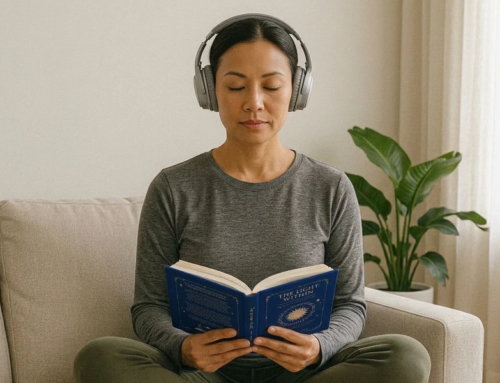
Start with one of my free guided audios. It’s a calming way to settle your body and breath at the end of a long travel day.
Want help with your own body?
In private online yoga therapy sessions, I’ll build a practice around your pain, your history and your goals.
May you travel with ease and walk with peace. Namaste.
For more, see my guides to gentle yoga for hip pain and Supported Pigeon Pose.
Sources
- Roberts, C. (2016). Yoga for Low Back and Hip Health. Poses adapted from the book: Reclined Leg Rest, Supported Bridge With Bent Legs, Supported Child’s Pose, Supported Belly Down Twist (Extended Leg Variation) and Supported Inversion.
- Sullivan, M. B., Erb, M., Schmalzl, L., Moonaz, S., Noggle Taylor, J. and Porges, S. W. (2018). Yoga Therapy and Polyvagal Theory: The Convergence of Traditional Wisdom and Contemporary Neuroscience for Self-Regulation and Resilience. Frontiers in Human Neuroscience, 12, 67.
- Dydyk, A. M., Hu, Y. and Stretanski, M. F. (2025). Psoas Syndrome. In StatPearls. StatPearls Publishing.
- American Psychological Association. (2023, November 30). Even a joyous holiday season can cause stress for most Americans. Survey conducted by The Harris Poll.
- American Psychological Association. (2018). Stress effects on the body.
- Yoga Sutra 2.42, santoshad anuttamah sukha labhah. Checked against published translations, including Wisdom Library’s edition with Vyasa’s commentary.