
It’s December. After a full day at work, you remember there’s a holiday fundraiser you volunteered for at the kids’ school, a toy drive you promised to help run and a holiday-themed spirit week that calls for ugly sweaters on Wednesday and pajamas on Friday. You also agreed to host the family gathering on Saturday. The gifts are only half-purchased, the wrapping hasn’t begun and the evening yoga class you teach still needs a theme. Then, at nine o’clock, a text arrives from a neighbor. Her day care plans just fell through, and she asks if you can pick up and watch her kids tomorrow. You say yes. You almost always say yes.
For women, and for moms especially, this season often comes with a second, invisible job.
We keep the gift lists, plan the meals, remember the teachers and neighbors, and hold everyone’s schedules in our heads. Add the roles of yoga teacher, yoga therapist or caregiver, and the season can quietly turn generosity into depletion. We give our time, our energy and our attention until little is left over. The shoulders creep toward the ears and we hold the breath as if bracing for the next demand. We sleep less, waking in the middle of the night with the to-do list running through the mind. The practices and time we make for balance and restoration are often the first thing to go. We aren’t alone in this. In a 2023 poll for the American Psychological Association, 89% of U.S. adults said something about the holidays causes them stress, with money, finding the right gifts and missing loved ones near the top of the list (American Psychological Association, 2023). By January, many of us feel more drained than joyful, and wonder where the season went.
Much of that stress comes from outside, but some of it comes from within. It’s a background demand we place on ourselves to make every gift perfect, to host the ideal gathering, to say yes to every invitation and to keep everyone happy. There is nothing wrong with us for feeling this way. Many of these expectations were learned long ago, and they can be hard to see when they feel like part of who we are. Noticing the pressure, gently and without judgment, is a kind step toward easing it. It also shows us where we have choice, because not everything about the season is ours to decide.
Other people’s actions and demands are out of our control but how we respond is within our control.
And our yoga offers ways to pause, to cultivate awareness and to discern what is within our control and where we can soften. We practice so we can focus on what matters most to us, pull our energy back from what doesn’t need it and direct it where it is needed. We can also make space for balance and restoration, so we have the energy to enjoy the celebrations too.
One of yoga’s oldest teachings speaks to this. The yamas (YAH-mahs), the first limb of Patanjali’s (pah-TAHN-jah-lee) eightfold path, are ethical practices for how we live with others and with the world. Brahmacharya (brah-mah-CHAR-yah), one of the five yamas, is about the wise use of our energy. In Yoga Sutra (SOO-trah) 2.38, brahmacharya pratisthayam virya labhah (brah-mah-CHAR-yah prah-tish-TAH-yahm VEER-yah LAH-bhah), Patanjali tells us what it offers. In her book True Yoga, Jennie Lee translates it as “dedicated to self-control, great energy is gained.”
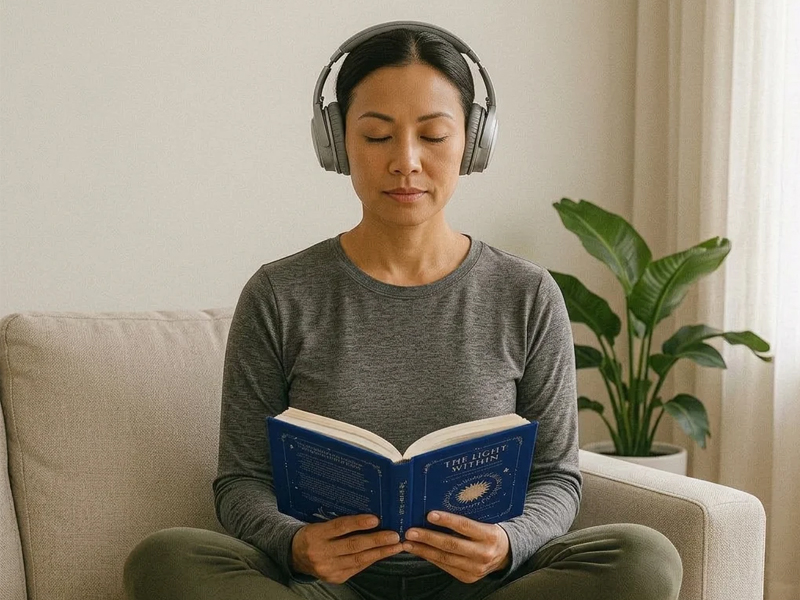
Brahmacharya doesn’t ask us to stop giving, and it won’t make the to-do list disappear or quiet every expectation. What it does is build awareness. It helps us notice the moment we reach for more than we have to give. And once we can see that pattern, we have a choice. We can keep pushing, or we can pause, breathe and take the time to restore and replenish ourselves, so we have more to give. The poem below, from my book The Light Within, puts it simply. It invites us to choose “presence over habit, stillness over urgency and simplicity over excess,” and to remember “that more is not better” and “that enough is a blessing.” After it comes a 5-minute energy bank practice, a simple way to check in with our energy before we spend it.
In this post: A poem for brahmacharya · What brahmacharya means · A 5-minute energy bank practice · Why giving from a full cup matters · A poem about giving from the overflow · Journal prompts · FAQ
A poem for brahmacharya
Chapter VIII, Living the Practice, in The Light Within holds a poem for each of the ten yamas and niyamas (nee-YAH-mahs). This one, for brahmacharya, is a reminder that balance is not about holding back. It is about honoring what keeps our light steady. Read it slowly, perhaps out loud, and pause at the end of each stanza for one easy breath.
Devotion to Balance
a poem for Brahmacharya (moderation, self-control)
Let the days
be a quiet devotion
to balance.
To the sacred act
of conserving your light.
Choosing when to shine bright,
choosing when to dim
and when to glow steadily
from within.
Not to suppress,
but to honor
what nourishes you most.
A sacred awareness
of your time,
your energy,
your prana,
the life force
weaving purpose,
joy and healing through your being.
For in balance,
your life force becomes boundless.
Where the act of self-control becomes freedom
from compulsion’s grip.
Where courage finds the spaciousness to
choose presence over habit,
stillness over urgency
and simplicity over excess.
It is harmony
between rest and creation,
desire and discernment,
effort and ease.
A steady path
where moderation becomes vitality
and inner peace
grows quietly
from right use of energy.
We begin to notice
what depletes us,
what inflates but does not sustain.
We stop chasing more
and begin to cherish
what already is.
We listen to the body
in tension,
in craving,
in fatigue
and respond with love.
The practice of Brahmacharya
invites conservation,
the wise tending of energy
as a path to awakening.
For when we nourish the self,
we serve the whole.
So let the ritual of Brahmacharya
become the opportunity to move with intention,
to protect your energy,
to remember that more is not better.
That enough is a blessing.
That balance is liberation.
And your energy,
a sacred gift,
the precious fuel
you choose to direct
as you wish
for balance,
for healing,
for fulfillment,
for transformation.
From The Light Within, p. 226
After reading, take a moment to sense what comes up in the body, mind and spirit. Notice what resonates and what inspires. Notice with curiosity and kindness, with an open, compassionate heart. Simply noticing is the first step toward tending our energy with love.
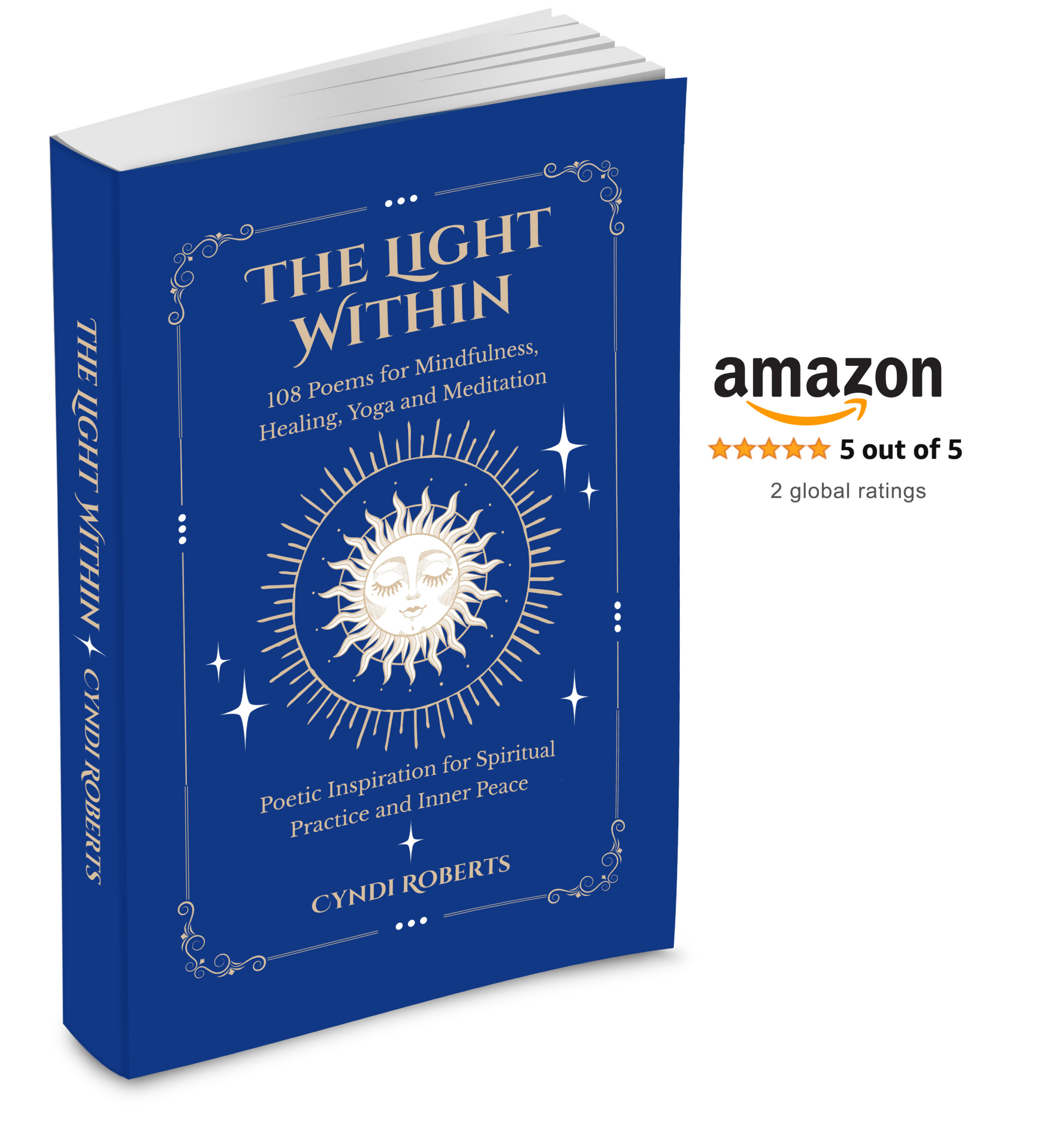
Devotion to Balance is one of 108 poems in The Light Within. Each one is sorted by theme so you can find the right words for your spiritual practice, a yoga or meditation class or workshop, a journal page or a quiet morning.
What brahmacharya means
There are five yamas (YAH-mahs), or ethical restraints, within Yoga Sutra 2.30: ahimsa (ah-HIM-sah, compassion and peacefulness), satya (SAHT-yah, integrity and truthfulness), asteya (ah-STAY-yah, generosity and prosperity), brahmacharya (moderation and self-control) and aparigraha (ah-pah-ree-GRAH-hah, appreciation and letting go). Patanjali calls them a universal great vow (Yoga Sutra 2.31). In Edwin F. Bryant’s translation, they are “not exempted by one’s class, place, time, or circumstance,” because they are universal.
The word brahmacharya is often translated as “moving toward Brahman” (BRAH-mahn), or living in a way that keeps us connected to the divine. In some traditions it has meant celibacy, but it means so much more than the suppression of sexual energy. Many modern teachers, including me, teach it more broadly as moderation and the right use of our physical, mental, emotional and spiritual energy.
Additionally, I offer that brahmacharya is a balance between giving and receiving. When we give without ever pausing to receive, the well runs dry. When we let ourselves be nourished by rest, support and simple joys, our giving can flow from fullness rather than obligation.
During the holidays, brahmacharya might look like saying yes to one gathering and no to another. It might mean choosing one heartfelt gift instead of five rushed ones, or leaving the dishes for a few minutes to sit and breathe. These are small choices, and over time they can add up to a season that feels more peaceful and less draining.
A 5-minute energy bank practice
Living with a chronic illness has taught me to stay aware of not depleting myself, so I don’t cause a flare-up and miss out on what is important to me. I use the practice of brahmacharya daily to discern the flow of my precious energy. This practice, my “energy bank,” is a concept that helps me reflect moment-to-moment about my needs so I can avoid the dire consequences of not paying attention.
Simply put, I think of my energy as money, my “money energy,” and I reflect on how much I have in the “bank.” When I know a big event is coming, I save for it. When I want to bake or paint, I exchange the “money energy” for a chore I can wait to do. If I notice my schedule has too much driving or socializing, I know I need to rest and create a reserve. I can feel a negative balance coming on, so I know that signal to rest instead of saying yes. Checking the balance before I spend helps me give from choice, with patience, clarity and kindness. There’s less inner conflict feeling obligation or demand. I shift from “I have to” to “I get to.”
As an informal practice:
Check the balance any time before saying yes: before answering a request, while wrapping a gift or as you walk into a holiday gathering. Take one slow breath in and ask, “How much energy is in my bank right now?” Breathe out and notice the answer: full, steady, low or overdrawn. Then let that answer guide the next choice, whether it is to spend, to save or to pause.
As a formal practice:
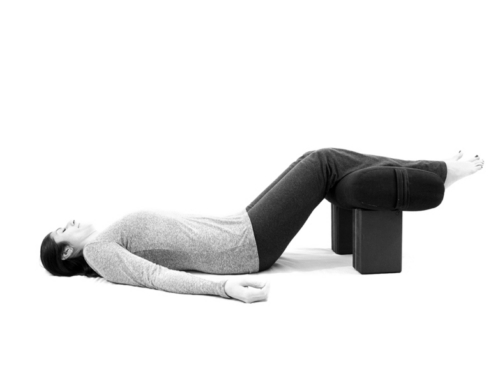
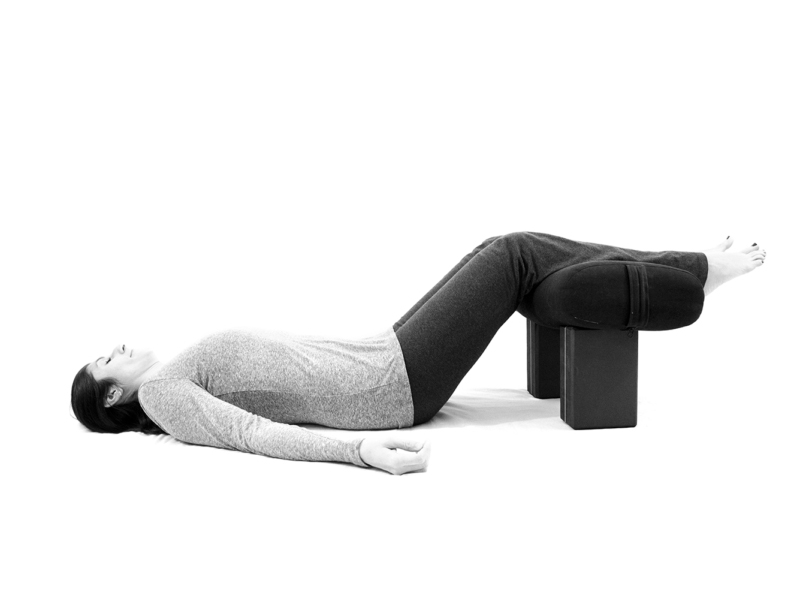
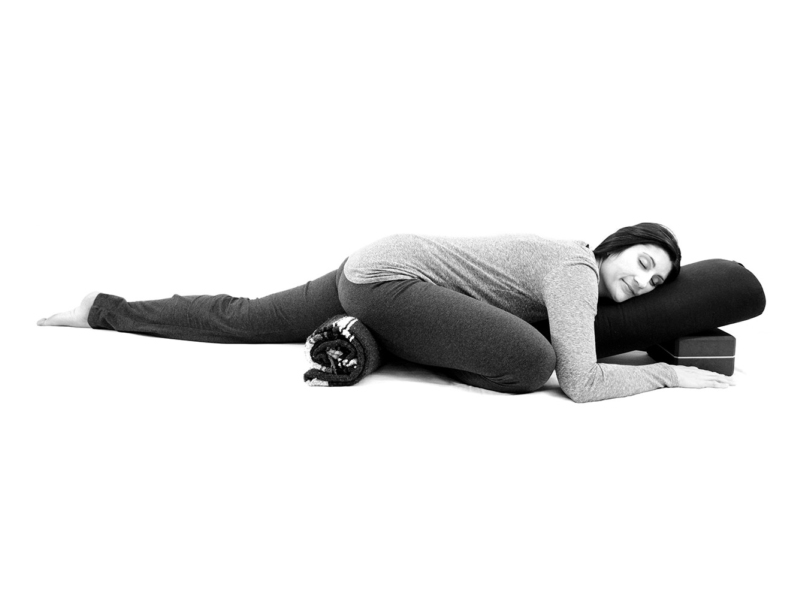
- Settle in. Sit in a chair with the feet flat on the floor, or lie down with a pillow under the knees. Close the eyes or soften the gaze. Feel the weight of the body supported by the earth.
- Balance the breath. Breathe in and out through the nose. Gently count the inhale, perhaps to four, and let the exhale match it. Stay with this even, steady rhythm for five or six rounds.
- Check the balance. Bring awareness to the body from the feet up to the crown of the head. Ask, “How much energy is in my bank today?” Notice what answers. A full account might feel steady, with patience and the ability to discern. The body feels relaxed, the breath is slow and low, and you may even feel contentment. A low account might feel heavy, tight or tired, with the shoulders lifting and the breath staying shallow. Simply notice.
- Look at the week ahead. Bring to mind the next few days. Which events and tasks feel like deposits, such as time with people you love, a walk, meditation, breathing or asana? Which feel like withdrawals? Notice any inner “shoulds,” like “I should do more” or “it has to be perfect.” Noticing them gives you a choice about what to spend your energy on.
- Make a plan. If the balance feels plentiful, choose where to spend it on purpose. If it feels overly withdrawn or depleted, choose to save. What could be postponed, simplified, shared or declined? What one deposit could be made today, such as an early night, a few slow breaths or ten minutes of quiet? Let this inquiry be information that helps you connect within and be your best self. Caring for yourself lets you be your best for the people you love, without resentment and without harming your health.
- Return. Take three slow breaths. If the eyes were closed, gently blink them open. Let the body stretch and move with care back into the day.
Why giving from a full cup matters
How we give may matter as much as how much we give. In a series of four studies, helping others was linked with greater well-being for the helper when the help felt freely chosen, compared with help given out of pressure or obligation (Weinstein and Ryan, 2010). When we tend our own energy, we are more able to give from choice and from the heart, and our giving tends to feel lighter for everyone involved.
A poem about giving from the overflow
This excerpt is from a longer poem about devotion in small, everyday moments. It pairs gently with the receive-and-give breath in the practice above.
Love in the Everyday (excerpt)
a reflection on devotion in small moments
Love does not always arrive
with fireworks or grandeur.
Often,
it slips in quietly
with a pause,
with a breath,
with a gaze that holds more
than words ever could.
Love lives
in the repetition of kindness,
in the courage to stay open,
in the balance between offering
and receiving.
To love well
is not to give endlessly,
but to give
from the overflow
of what we allow ourselves
to receive.
The way you pour tea for your guest
before yourself, with presence,
this, too, is love.
The way you forgive,
even when the other will never know.
The way you soften,
when you could have shut down.
The full poem, along with 107 others, is in The Light Within (p. 185).
Get poems and simple practices in your inbox
Join my mailing list for new readings, practices and book news.
Journal prompts
- What is in my energy bank right now, and what would I like it to hold by the end of the season?
- Which deposits fill me up, and which withdrawals quietly drain me? What would it feel like to “choose presence over habit, stillness over urgency and simplicity over excess”?
- Where am I giving out of obligation, and where am I giving from the heart?
- Place the hands on the heart and breathe evenly for a few rounds. What would it feel like to receive as freely as I give?
- What does “enough is a blessing” look like for me this season?
Frequently asked questions
What is brahmacharya?
Brahmacharya is one of the five yamas, or ethical practices, in Patanjali’s Yoga Sutras. Today it is often taught as moderation and the wise use of energy, so that we can live, give and practice in a balanced way.
Does brahmacharya mean celibacy?
In some traditions, especially for monks and renunciates, it has meant celibacy. Yet brahmacharya means so much more than the suppression of sexual energy. Many yoga teachers today teach it more broadly as moderation in our habits and in how we spend all of our energy: physical, mental, emotional and spiritual. That makes it a practice anyone can bring into daily life.
How can I practice brahmacharya during the holidays?
Start small. Notice when you feel depleted, and choose one nourishing act each day, like rest, a walk or a few even breaths. Saying no to one obligation can be an act of brahmacharya too. No is a complete sentence and can be a complementary practice.
Can I use this poem to teach the yamas in my yoga class?
Yes. The Light Within was written with yoga teachers and yoga therapists in mind. Chapter VIII, Living the Practice, has a poem for each of the ten yamas and niyamas, and the Yama and Niyama Reference Table (p. 19) points to more poems for each one. The Poetic Practice Index (p. 273) at the back sorts every poem by use, such as opening meditations, final relaxation and journal prompts, so you can find a reading in a minute or two.
Take the next step
Bring a poem into each day. The Light Within offers 108 poems for mindfulness, healing, yoga and meditation, with an index that helps you find the right reading for class, journaling or quiet reflection. It also makes a thoughtful holiday gift for the yoga teacher or meditator in your life, a gift that keeps giving all year.
Look inside the book on the book page.
Want one-on-one support? I also offer private online yoga therapy sessions.
May this season fill your cup as fully as you fill the cups of others, and may your light glow steadily from within. Namaste.
Sources
- Bryant, E. F. (2009). The Yoga Sutras of Patanjali: A New Edition, Translation, and Commentary. North Point Press. Translation of Yoga Sutra 2.31, p. 248.
- Roberts, C. The Light Within: 108 Poems for Mindfulness, Healing, Yoga and Meditation. “Devotion to Balance” (p. 226) and “Love in the Everyday” (p. 185).
- American Psychological Association. (2023, November 30). Even a joyous holiday season can cause stress for most Americans. Press release.
- Weinstein, N. and Ryan, R. M. (2010). When helping helps: Autonomous motivation for prosocial behavior and its influence on well-being for the helper and recipient. Journal of Personality and Social Psychology, 98(2), 222-244.
- Lee, J. (2016). True Yoga: Practicing with the Yoga Sutras for Happiness and Spiritual Fulfillment. Llewellyn. Translation of Yoga Sutra 2.38 quoted on pp. 61-62.